
Alpha Ring
When Students Touch The Physics
For most students studying plasma and fusion physics, the science exists at a remove. They read about it. They model it. They watch it happen at facilities they may never visit.
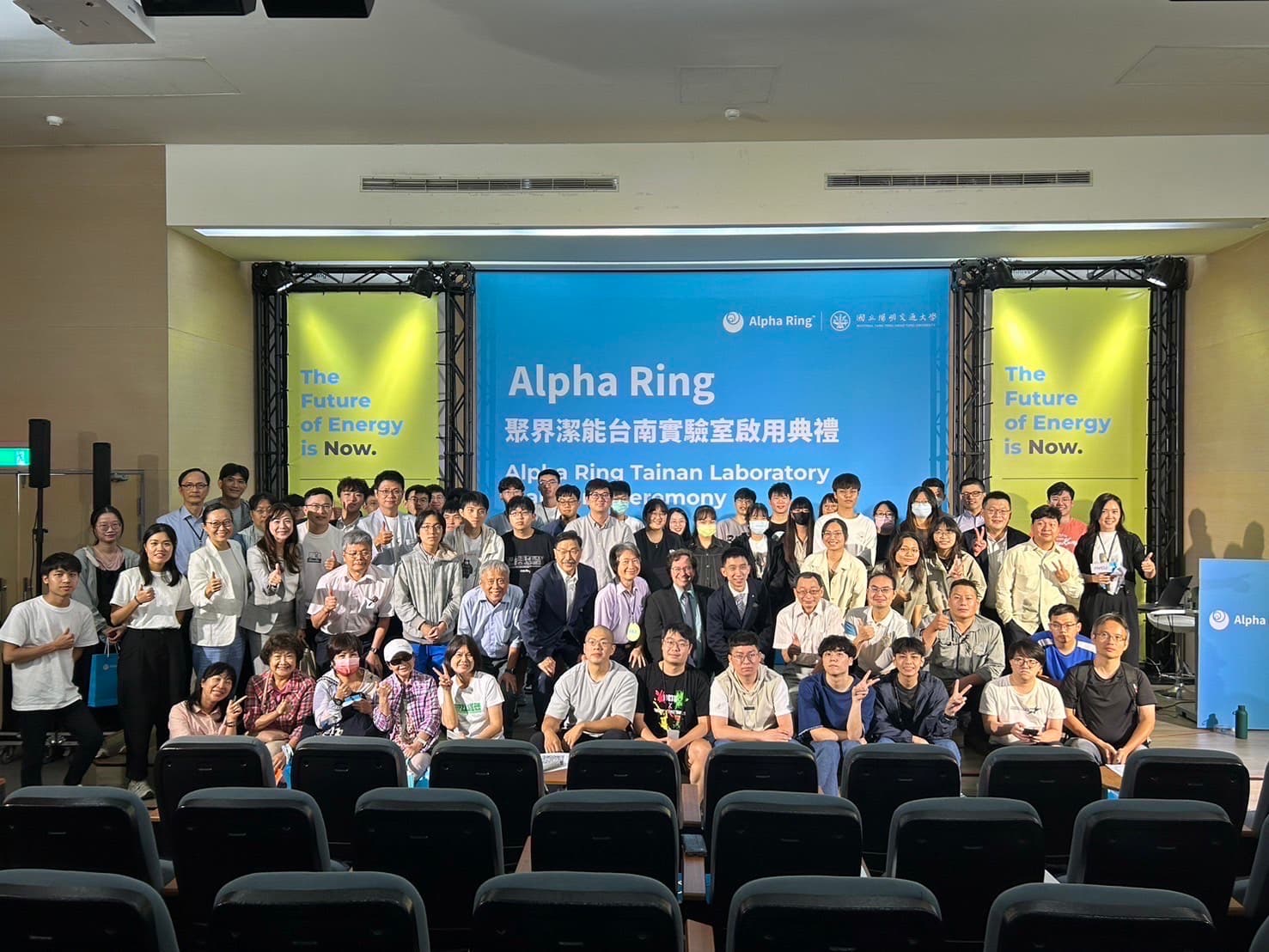
For most students studying plasma and fusion physics, the science exists at a remove. They read about it. They model it. They watch it happen at facilities they may never visit. The experiments that actually generate fusion reactions — that accelerate ions, sustain plasma, and produce neutrons — take place at national laboratories and major research installations where access is limited and the infrastructure required is anything but portable.
This is not a criticism of how physics has been taught. It reflects a real constraint: until recently, practical opportunities for hands-on fusion science have typically been limited to a select few students who had already chosen this direction of study.
We believe that is changing, and we think it matters more than it might appear.
What we have seen in the classroom
In early 2025, Alpha Ring installed one of our Alpha-E devices at Sofia University's Department of Radiophysics and Electronics in Bulgaria. What followed was instructive, though we want to be clear about what we are claiming: this is one institution, one department, and one year of experience. It is not a controlled study.
What we observed was this: a new elective course, Introduction to Nuclear Fusion Systems, built around the device, filled to capacity. A workshop drew approximately 100 participants — a remarkable number for a university physics department of any size. A bachelor's student completed a thesis using the device. The course, by all accounts, will run again.
We are describing this not to take credit for Sofia University's outcomes — that credit belongs to the faculty and students who did the work — but because it illustrates something that is easy to underestimate. When students can actually operate an instrument, vary the parameters, observe the plasma, and measure the results themselves, their relationship to the material changes. They are no longer learning about fusion. They are doing it.
Why access is the problem worth solving
The case for hands-on physics education does not require new evidence. It is well established that active, experimental learning produces deeper understanding than passive instruction. The more interesting question is why plasma and fusion science has remained so inaccessible to students compared to other disciplines.
Part of the answer is historical. These fields developed in the context of large-scale national programs with significant infrastructure requirements. The instruments built for that context are not designed for educational deployment — they are too large, too expensive, too specialized. Most physics departments that wanted to give students genuine fusion experience had few options beyond hoping for a relationship with a national laboratory.
Part of the answer is also that introductory pedagogy was not the priority. Students who wanted to work in the field were expected to encounter the real science at the graduate level, at a facility, under supervision.
That sequencing made sense for a long time. We think it is worth examining now, not because fusion energy is solved, but because the field is growing — in investment, in scientific activity, in the number of programs, companies, and institutions engaging with it seriously. More students want to engage with plasma and fusion physics earlier in their training. The question is whether we can meet them where they are.

An invitation to the field
Alpha Ring is a company, and we have a commercial interest in this question. We want to be transparent about that. We have developed a family of instruments — from an ECR microwave plasma teaching device to a compact ion beam fusion system — specifically designed to make plasma and fusion science accessible at bench scale, for teaching and for research.
But we are also genuinely curious about how the field thinks about this problem. What does it take to integrate hands-on fusion and plasma content into an existing curriculum? What are the real barriers? Where does experimentation add the most value, and where does simulation serve the purpose just as well?
We are at EPS 2026 in Edinburgh and would welcome that conversation. We are also collecting perspectives from educators and researchers through a short survey — if you have a view on how hands-on physics education should evolve in this field, we would like to hear it. And we’re happy to share the results with anyone who contributes.
Share your perspective — 5-minute survey
Alpha Ring International develops bench-scale plasma and fusion instruments for teaching and research applications. Learn more at alpha-e.ai.